• NILE FISH WITH HERBS AND FAT

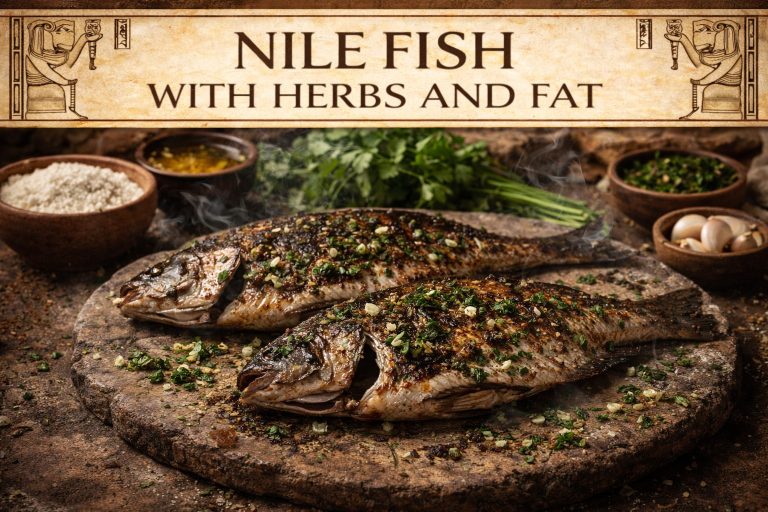
    Simple ancient Egyptian fish preparation Source: Archaeological remains, tomb scenes, fishing reliefs, settlement middens, and medical and administrative papyriDate: In use from the Predynastic period onward, c. 4000 BCE, continuing throughout all periods of ancient Egyptian history Historical context Fish was one of the most accessible and important protein sources in ancient Egypt, particularly for…
  • |

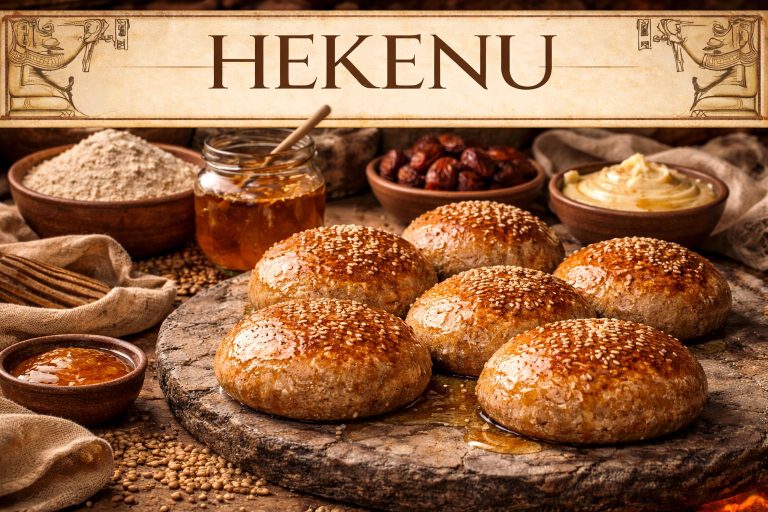
    Hekenu

    Ancient Egyptian ritual honey bread Source: Offering lists, temple inscriptions, funerary texts, and tomb scenesDate: In use by the Old Kingdom, c. 2600 BCE, and continuing through the New Kingdom and later periods Historical context Hekenu was not everyday bread. It appears consistently in offering lists, temple inventories, and funerary contexts, marking it as a…

  • |

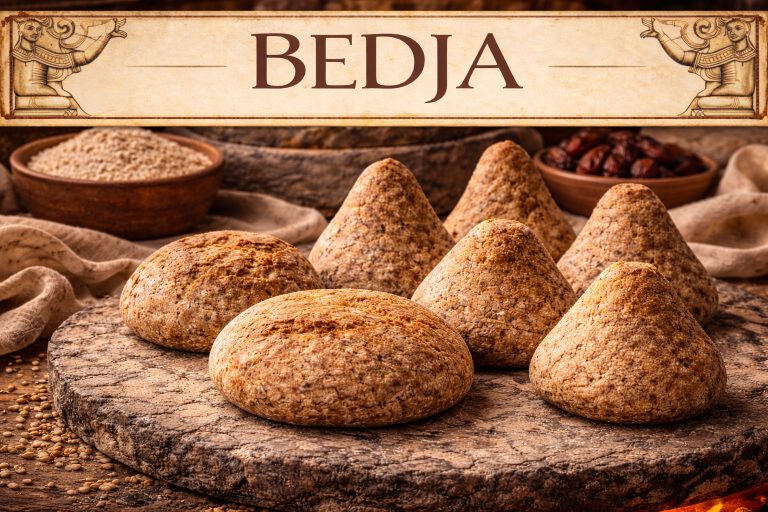
    Bedja

    Ancient Egyptian emmer bread Source: Archaeological evidence from tomb scenes, carbonized loaves, grinding tools, and administrative textsDate: In use from the Predynastic period onward, c. 4000 BCE, continuing through all periods of ancient Egyptian history Historical context Bread was the foundation of the Egyptian diet and economy. Bedja refers broadly to bread made from emmer…

  • |

    Ta-Henket

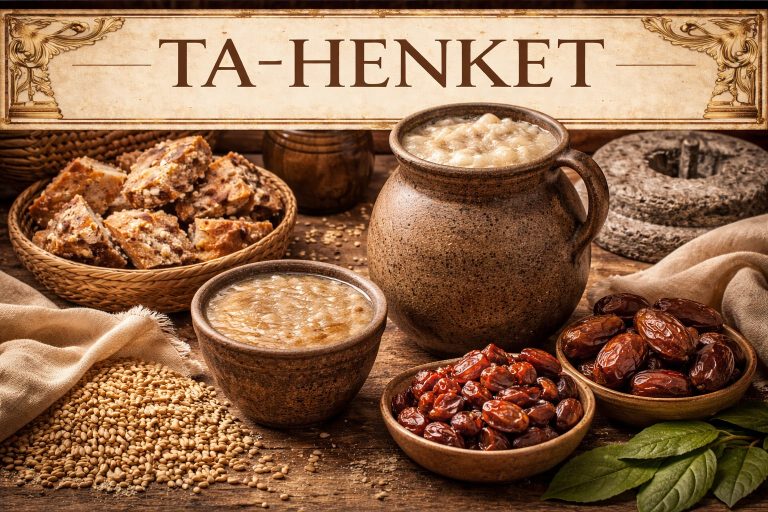
    Ancient Egyptian bread beer Source: Archaeological evidence from breweries and tomb scenes, supported by textual references in administrative and medical papyriDate: In use by the Old Kingdom and earlier, c. 2600 BCE, and continuing through all periods of ancient Egyptian history Historical context Ta-henket was not a luxury drink. It was a dietary staple in…

  • |

    Placenta

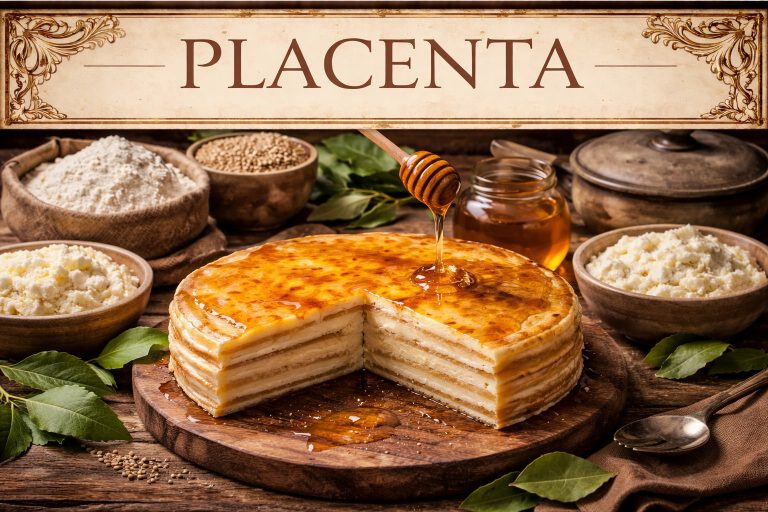
    Layered honey cheesecake Source: Cato, De Agri Cultura 76, Placentam sic facitoDate: Mid 2nd century Rome BCE, commonly placed around 160 BCE Historical context Placenta is a structured Roman baked sweet built in layers, closer to a layered cheesecake than a modern cake. In Cato it sits among practical farmhouse breads and cheeses, which places…

  • |

    Moretum

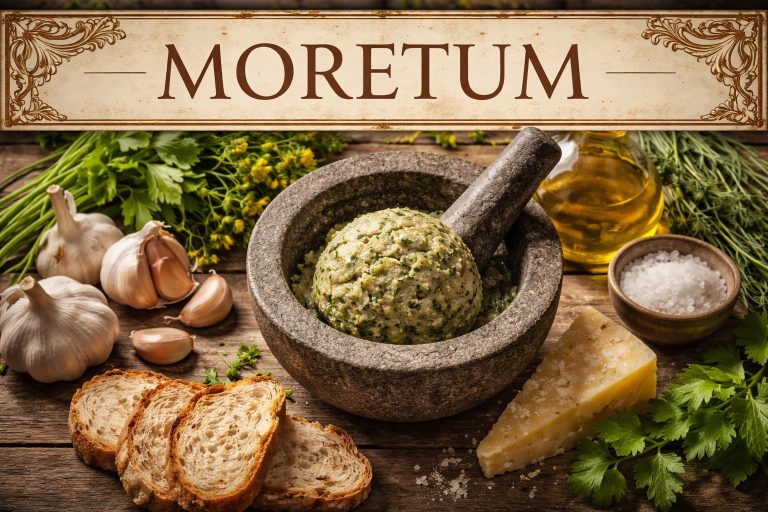
    Roman garlic and herb cheese Source: Appendix Vergiliana, MoretumDate: Late Republic to early Roman Empire, 1st century BCE to 1st century CE Historical context Moretum appears in a short Latin poem describing the morning routine of a small farmer named Simulus. The dish is prepared at dawn before fieldwork begins using ingredients gathered from the…