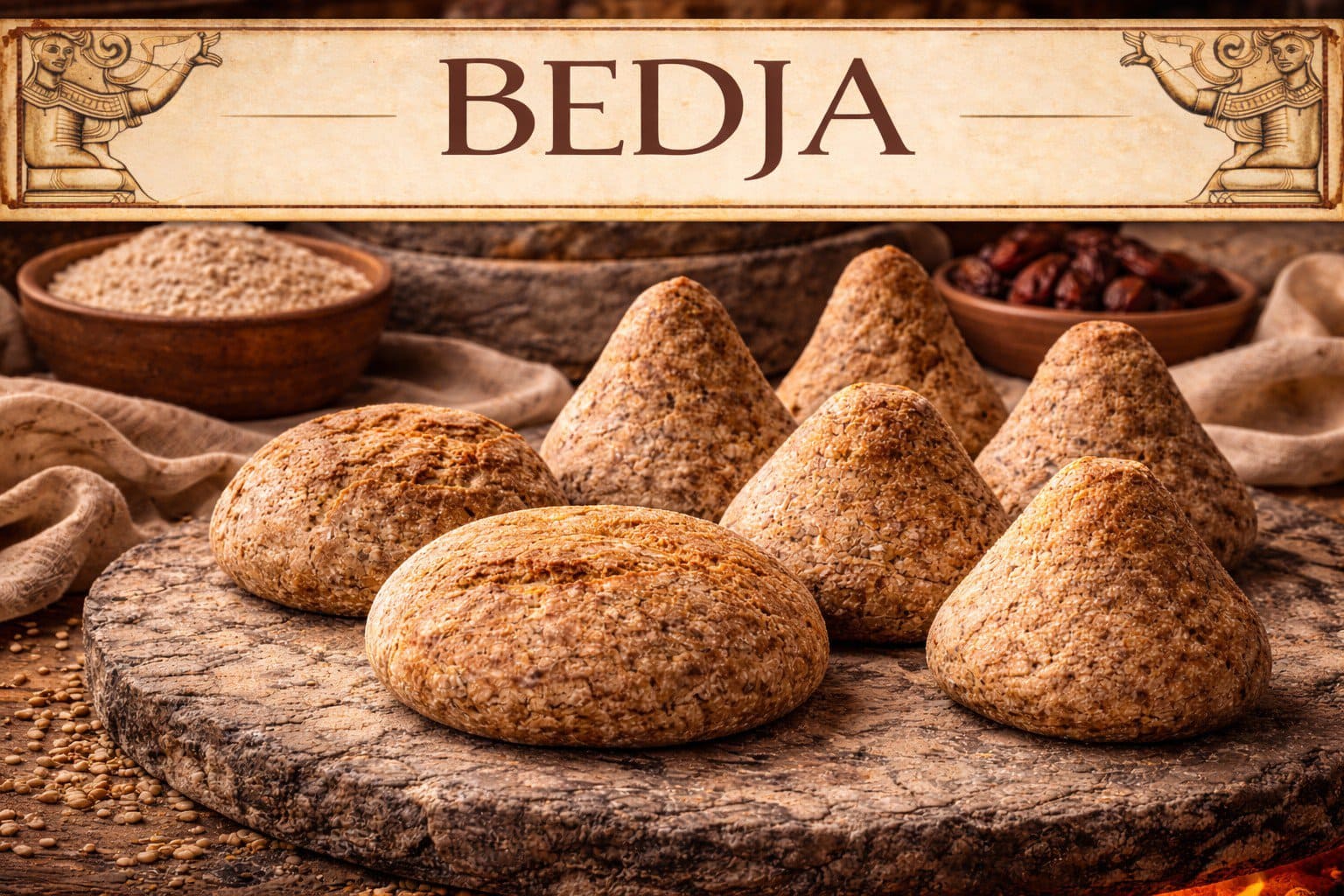
Ancient Egyptian emmer bread
Source: Archaeological evidence from tomb scenes, carbonized loaves, grinding tools, and administrative texts
Date: In use from the Predynastic period onward, c. 4000 BCE, continuing through all periods of ancient Egyptian history
Historical context
Bread was the foundation of the Egyptian diet and economy. Bedja refers broadly to bread made from emmer wheat, the primary grain cultivated along the Nile. It was consumed daily by nearly every level of society, from agricultural workers to elites, and it formed the basis of wages, offerings, and funerary provisions.
Bread production was labor intensive and communal. Grain was ground on stone querns, mixed by hand, shaped, and baked in a variety of forms. Tomb reliefs show women grinding grain, shaping dough, and baking loaves in conical molds or directly on hot surfaces. Hundreds of carbonized loaves recovered from tombs show remarkable variation in size, shape, and texture, suggesting flexibility rather than strict recipes.
Ingredients (archaeologically attested)
- Emmer wheat (hulled wheat, primary grain)
- Water
- Natural yeast (from grain, air, or reused dough)
- Optional additions depending on context
- Dates or date paste
- Honey
- Animal fat or oil
- Herbs or seeds
Salt was not always added and was not universal.
Method (reconstructed from archaeological and experimental evidence)
- Emmer wheat is cleaned and dehulled.
- The grain is coarsely ground using stone querns.
- Flour is mixed with water to form a thick dough.
- Dough may be left to ferment naturally or baked immediately.
- The dough is shaped into flat, round, or conical loaves.
- Loaves are baked in clay molds, against hot surfaces, or buried in hot ash.
- Bread is eaten fresh or dried for storage.
Texture ranges from dense and coarse to lightly leavened, depending on fermentation and grind.
Who ate it
- Farmers and laborers
- Craftspeople and builders
- Priests and temple staff
- Elites and royalty
- The dead, as funerary offerings
Bread was not a side dish. It was sustenance, currency, and ritual material.
Replicating Bedja today
To recreate Egyptian emmer bread, simplicity is key.
Modern equivalents
- Emmer wheat flour or farro flour
- Stone ground whole wheat flour as a fallback
- Sourdough starter or wild fermentation
- Water only, no commercial yeast needed
Practical modern method
- Mix emmer or farro flour with water to form a stiff dough.
- Knead briefly, then rest for 30 minutes.
- Allow to ferment naturally for several hours or overnight if desired.
- Shape into small flat loaves or rounds.
- Bake on a hot stone, cast iron surface, or in a preheated oven at high heat.
- Cool briefly before eating.
Expect a dense, nutty bread with a coarse crumb.
Notes for modern audiences
- Emmer contains gluten but behaves differently than modern wheat.
- Texture will be heavier than modern bread.
- Grit from stone grinding is historically accurate.
- Flavor is earthy, mildly sour if fermented, and filling.