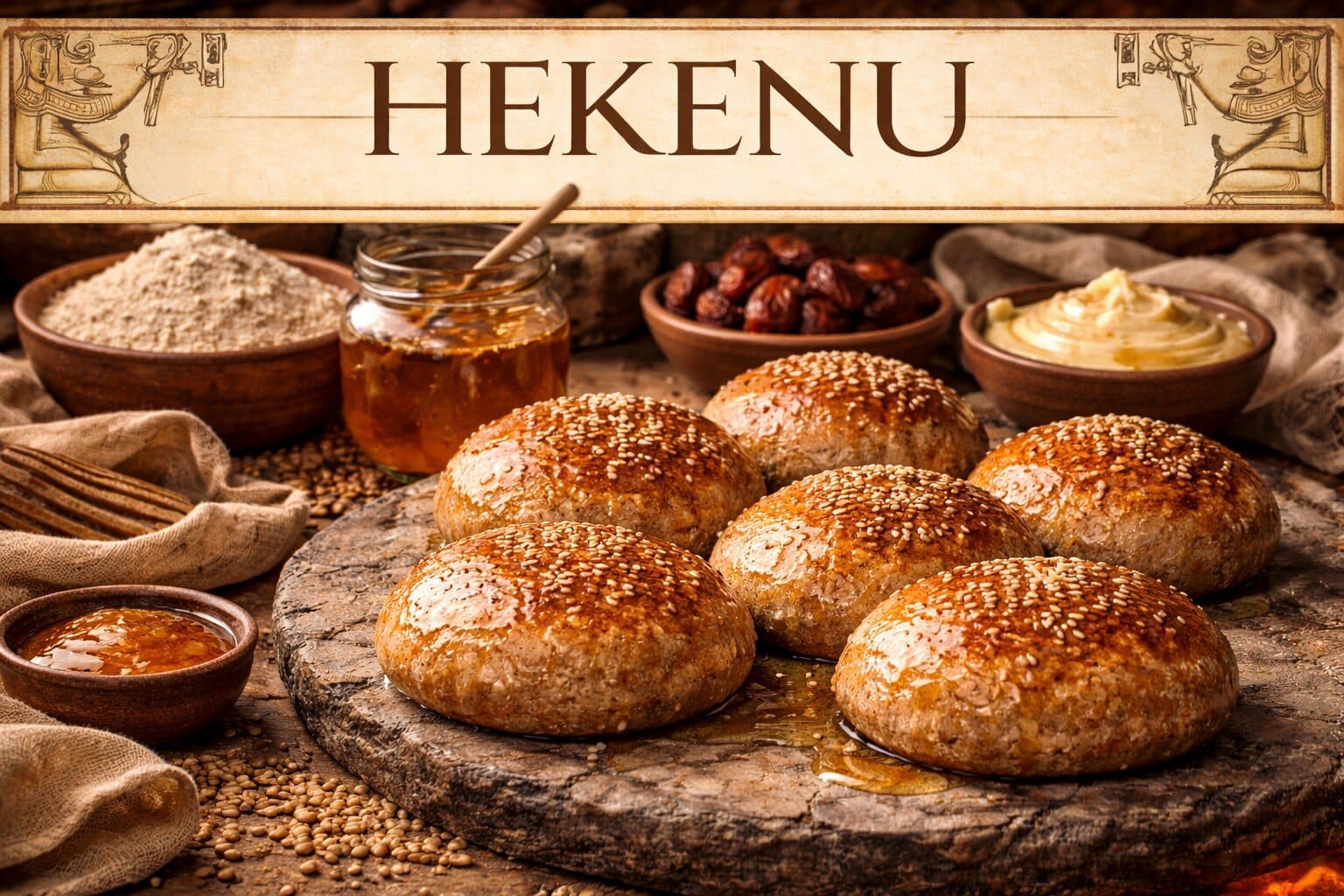
Ancient Egyptian ritual honey bread
Source: Offering lists, temple inscriptions, funerary texts, and tomb scenes
Date: In use by the Old Kingdom, c. 2600 BCE, and continuing through the New Kingdom and later periods
Historical context
Hekenu was not everyday bread. It appears consistently in offering lists, temple inventories, and funerary contexts, marking it as a ritual and celebratory food rather than a daily staple. It was prepared for festivals, temple offerings, funerals, and moments of abundance, and it is frequently listed alongside beer, meat, and incense as part of formal food presentations to the gods and the dead.
Unlike simple emmer loaves, hekenu is enriched. The presence of honey and fat signals status, surplus, and intention. Honey was precious in ancient Egypt, valued as food, medicine, and offering, while animal fat or oil added richness and caloric density. This bread sits at the intersection of food and ritual, meant to nourish both body and spirit.
Ingredients (textually and archaeologically attested)
- Emmer wheat flour
- Water
- Honey
- Animal fat or oil
- Natural yeast or fermentation from reused dough
Optional additions, depending on period and context:
- Dates or date paste
- Milk or whey
- Aromatics or seeds (less commonly)
Salt is not consistently attested.
Method (reconstructed from evidence)
- Emmer wheat is cleaned, dehulled, and ground on stone querns.
- Flour is mixed with water to form a workable dough.
- Honey is incorporated to sweeten the dough.
- Fat or oil is added to enrich and soften the crumb.
- Dough may be left to ferment briefly or baked immediately.
- The dough is shaped into loaves or cakes suitable for presentation.
- Bread is baked in clay molds, against hot surfaces, or under ash.
- Finished loaves may be brushed with additional honey before offering.
The result is denser than modern cake but softer and richer than standard emmer bread.
Who consumed it
- Priests and temple personnel
- Participants in religious festivals
- Elites and households with access to honey
- The gods and the dead, through offerings
Hekenu was a marker of ritual significance, not casual consumption.
Replicating Hekenu today
To recreate hekenu in a modern kitchen, think of it as an enriched ancient bread, not a dessert cake.
Modern equivalents
- Emmer flour or farro flour
- Honey
- Olive oil, clarified butter, or animal fat
- Water or milk
- Natural fermentation or sourdough starter (optional)
Practical modern method
- Mix emmer or farro flour with warm water to form a dough.
- Knead in honey and fat until evenly incorporated.
- Allow to rest or ferment briefly if desired.
- Shape into small loaves or rounds.
- Bake at moderate heat until firm and lightly browned.
- Brush with honey while warm if replicating offering style.
The finished bread should be mildly sweet, dense, and aromatic.
Notes for modern audiences
- Honey content was likely modest, not cloying.
- Texture will be heavier than modern sweet breads.
- This bread pairs well with beer or dates.
- It was meant to be shared or offered, not sliced thin.