Simple ancient Egyptian fish preparation
Source: Archaeological remains, tomb scenes, fishing reliefs, settlement middens, and medical and administrative papyri
Date: In use from the Predynastic period onward, c. 4000 BCE, continuing throughout all periods of ancient Egyptian history
Historical context
Fish was one of the most accessible and important protein sources in ancient Egypt, particularly for non elite households. The Nile provided an abundance of species including tilapia, catfish, mullet, and perch. Fishing scenes appear frequently in tomb art, showing netting, spearing, drying, and cooking fish, while large quantities of fish bones recovered from settlements confirm daily consumption.
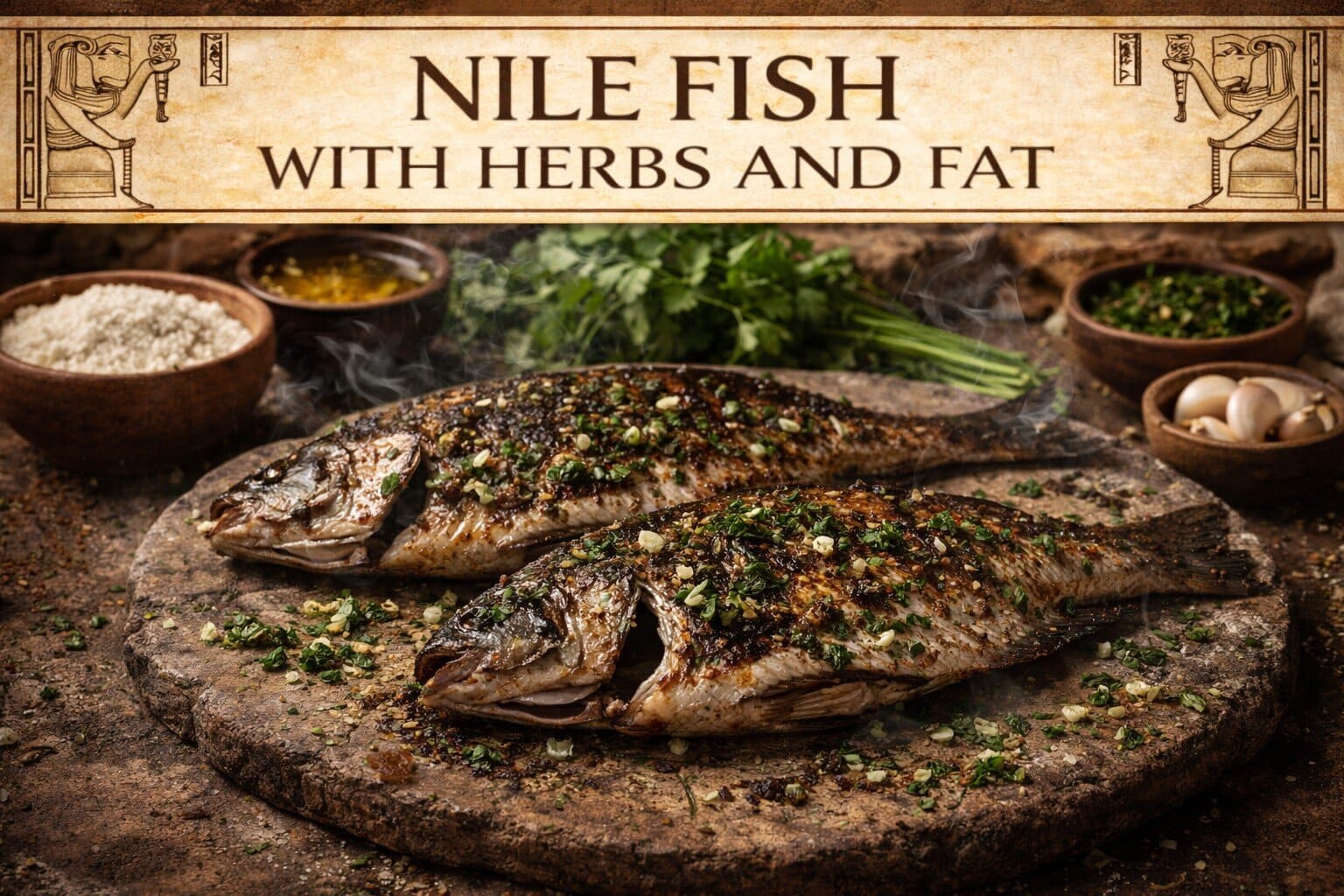
Unlike temple meats or ritual breads, fish occupied an ambiguous religious position. Some species were taboo in certain regions or cults, while others were entirely acceptable and widely eaten. For most Egyptians, fish was practical food: quickly cooked, dried, or preserved, often flavored simply with herbs, fat, and salt when available.
Ingredients (archaeologically attested)
- Fresh Nile fish (such as tilapia or catfish)
- Animal fat or oil
- Salt
- Aromatic herbs, depending on region and availability
- Coriander
- Dill
- Leek or onion
- Garlic
Optional additions:
- Vinegar like fermented liquids
- Dates or date syrup in small amounts
Spices were minimal and depended on access and trade.
Method (reconstructed from archaeological and iconographic evidence)
- Fish is cleaned and gutted soon after catch.
- The fish may be left whole or split open.
- Salt is rubbed onto the flesh.
- Herbs are crushed or chopped and applied to the fish.
- Fat or oil is added to prevent sticking and enrich flavor.
- Fish is cooked over open fire, on hot stones, or in clay vessels.
- Alternatively, fish may be dried in the sun for later use.
Cooking was fast and direct. Sauces were rare.
Who consumed it
- Agricultural workers
- Fishermen and river communities
- Urban households
- Some temple communities
- The poor and working classes primarily
Fish was everyday nourishment, not celebratory food.
Replicating Nile fish today
To recreate this dish, keep the preparation simple and restrained.
Modern equivalents
- Freshwater fish such as tilapia, perch, or catfish
- Olive oil or animal fat
- Sea salt
- Fresh herbs such as coriander, dill, or leek
Practical modern method
- Clean and pat dry a whole fish or fillets.
- Season lightly with salt.
- Rub with crushed herbs and oil or fat.
- Grill over open flame, bake on a hot stone or pan sear gently.
- Serve immediately or allow to cool for later consumption.
The goal is clean flavor and nourishment, not complexity.
Notes for modern audiences
- Fish was eaten very fresh or preserved quickly.
- Strong seasoning is not historically accurate.
- Texture may be firmer than modern fish dishes.
- This dish pairs naturally with bread or beer.
Here you go — expanded Egyptian culinary glossary, clean and consistent, with all sources removed and ready to drop into your site.
Glossary (Ancient Egyptian culinary terms)
rm, fish
ḥmꜣ.t, salt
šꜣ.w, coriander
ḫṯn, garlic (identification debated)
ḥnq.t, beer
bj.t, honey
bd.t, emmer wheat
šḏ.t, bread dough
bḏꜣ, bread mold