

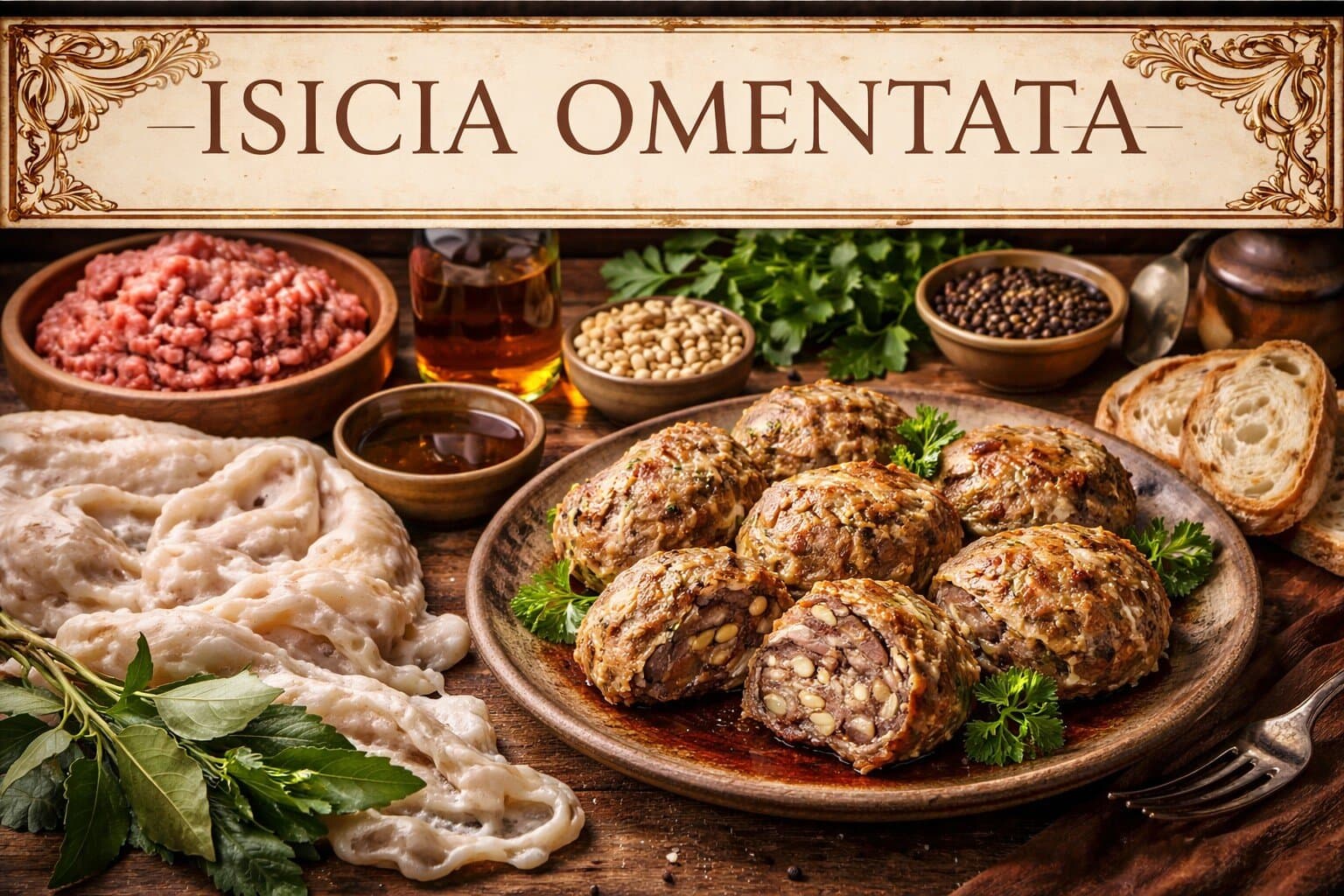
Roman meat patties wrapped in caul fat
Source: Apicius, De re coquinaria, Book II, “Aliter Isicia Omentata”
Date: Imperial Roman culinary tradition; surviving compilation commonly dated to the 4th to 5th century CE
Historical context
Isicia are minced meat preparations shaped into small forms and cooked in several ways across Apicius. “Omentata” identifies the method: the patties are wrapped in omentum, or caul fat, which bastes the meat as it cooks and helps a lean mixture stay moist. This dish belongs to a more refined kitchen culture than rural subsistence cooking, one familiar with forcemeats, binders, aromatics, and finishing sauces such as reduced wine. It reflects elite or urban dining rather than farmhouse fare.
Ingredients (as stated in the recipe)
- pulpam concisam – finely chopped meat
- medulla siliginei in vino infusi – crumb of fine white bread soaked in wine
- piper – pepper
- liquamen – fish sauce
- baccam myrtam extenteratam – myrtle berries, optional
- nucleis – nuts placed inside
- omento – caul fat for wrapping
- caroeno – reduced wine sauce served with it
Method (recipe order from the text)
- pulpam concisam – chop the meat very fine.
- medulla siliginei in vino infusi – soak fine bread crumb in wine and work it into the meat.
- piper, liquamen, si velis, et bacam myrtam – season with pepper, liquamen, and optionally crushed myrtle berry.
- pusilla isicia formabis – form small patties or rolls.
- intus nucleis et pipere positis – place nuts and pepper inside each patty.
- involuta omento – wrap each patty in caul fat.
- subassabis cum caroeno – cook gently and serve with caroenum.
Replicating Isicia Omentata today
To recreate this dish in a modern kitchen, use finely ground or very finely chopped meat to mimic the Roman texture. Soak soft white bread in wine, then squeeze it well before mixing it in as a binder. Season assertively with black pepper and fish sauce, which stands in for liquamen.
If available, wrap the patties in caul fat from a butcher to preserve the original cooking method. If not, cook gently in a pan with a small amount of fat, understanding the result will be slightly drier. Finish the dish with a reduced sweet wine sauce to echo caroenum. The result should be rich, savory, and aromatic, closer to a refined Roman forcemeat than a modern hamburger.
Ingredients to note today
Omentum (caul fat)
What to know:
- Caul fat is safe to eat but harder to source today.
- It must be kept cold and used fresh.
- Some people are unfamiliar with it, which can raise questions.
Modern guidance:
- Ask a butcher specifically for pork or lamb caul fat.
- If unavailable, the dish can be cooked without it, though the texture will be drier.
Liquamen (fish sauce substitute)
What to know:
- Roman liquamen was a fermented fish sauce, very pungent.
- Modern fish sauce is the closest functional equivalent.
Modern guidance:
- Use sparingly.
- People with fish allergies should avoid or omit it.
- Anchovy paste diluted with a little water can be used as an alternative.
Wine-soaked bread
What to know:
- Alcohol content cooks off, but the wine contributes flavor.
Modern guidance:
- Acceptable for most diners, but note it for those avoiding alcohol.
- Grape juice or diluted vinegar can be used as a substitute.
Pepper
What to know:
- Pepper was a luxury spice in Roman cuisine and used assertively.
Modern guidance:
- The recipe is pepper-forward by design.
- Reduce slightly if serving modern palates unused to heavy pepper.
Myrtle berries (if used)
What to know:
- Edible but uncommon today.
- Often confused with ornamental or non-culinary plants.
Modern guidance:
- Only use food-grade myrtle berries from a reliable source.
- Entirely optional and safe to omit.
Nuts (nucleis)
What to know:
- Likely pine nuts or similar.
- Introduced inside the patties.
Modern guidance:
- Clearly note nut content for allergy awareness.
- Can be omitted without breaking the recipe.
Summary for modern cooks
- No ingredients are inherently unsafe, but caul fat, fish sauce, nuts, and wine should be clearly noted for sourcing, allergies, and dietary preferences.
- This is a rich, highly seasoned dish meant to be eaten in small portions.
- Transparency keeps the recipe both historically honest and accessible.


